
What Memory Care Costs Include in Los Angeles
A monthly memory care fee in Los Angeles typically covers a secure residence, 24-hour trained staff, dementia-specific programming, meals, housekeeping, medication management, and hands-on personal care. The price moves up or down based on the level of care your parent needs, the type of suite, staffing ratios, location, and whether the community is nonprofit or for-profit.
Two similar monthly rates can cover very different things. Here is what memory care costs in Los Angeles usually include, what is billed separately, what pushes the price higher, and how families pay.
What a Memory Care Monthly Fee Typically Includes
Most licensed memory care communities in Los Angeles bundle the basics into one monthly fee:
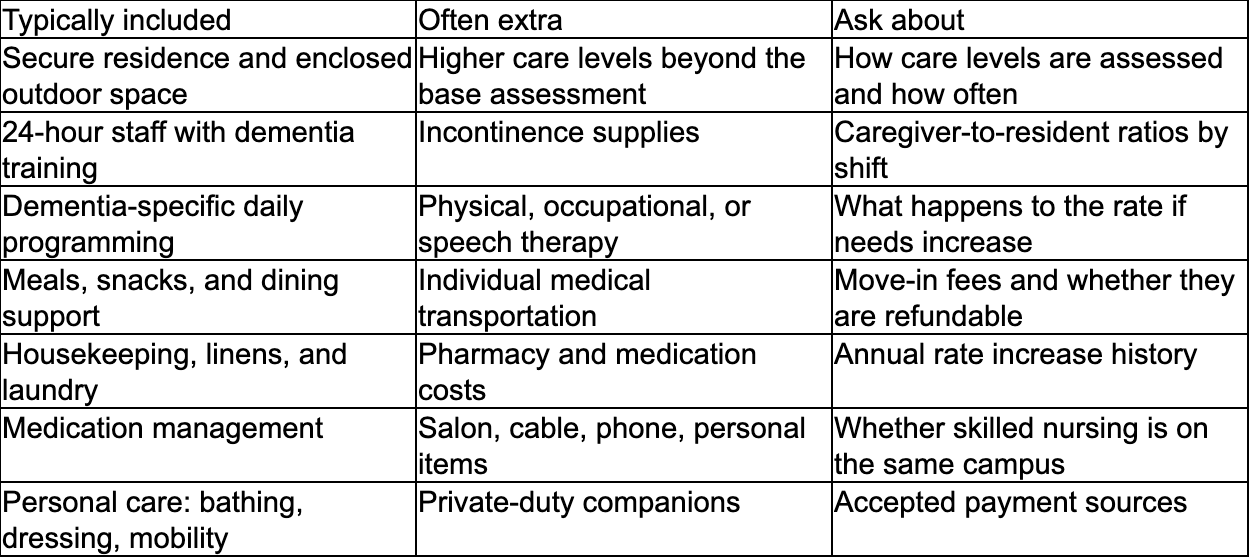
A secure, purpose-built setting. A secured entrance, enclosed outdoor space, and simplified layouts designed to reduce confusion and support safe movement.
24-hour staff trained in dementia care. Staff are on site around the clock and should have specific dementia training. At Solheim, the memory care team is trained in Teepa Snow's Positive Approach to Care.
Dementia-specific programming. Daily activities built around each resident's remaining abilities, with a predictable rhythm that can help lower anxiety.
Meals, housekeeping, and laundry. Three meals plus snacks, dining assistance, linens, and personal laundry.
Medication management. Staff store, track, and administer medications per physician orders.
Personal care assistance. Help with bathing, dressing, grooming, toileting, and mobility. How much is in the base rate, versus added through a care level, is where pricing starts to differ.
What Is Often Billed Separately or Tiered
This is where families get surprised. Before comparing communities, find out how each handles:
Levels of care. Many communities assign a care level after an assessment, with a higher charge for more hands-on support. Ask how often reassessments happen.
Incontinence supplies. Frequently billed as an add-on.
Therapies. Physical, occupational, or speech therapy is often billed through an outside provider or Medicare Part B when eligible.
Transportation. Individual medical trips may carry a fee.
Pharmacy. The medications themselves are usually separate.
Move-in or community fees. Ask whether any portion is refundable.
Salon, cable, phone, and personal items. Generally extra.
For how these services differ from general assisted living, see what makes dedicated memory care different from assisted living.
What Drives Memory Care Costs in Los Angeles
Memory care in Los Angeles tends to cost more than in many parts of the country, largely because of labor and real estate. Industry surveys such as the Genworth Cost of Care Survey generally place the Los Angeles area above the national median for residential senior care. Within LA, though, the range is wide. Here is why.
Staffing ratios and training
Care is mostly a people cost. More caregivers per resident, nurses on site, and ongoing dementia training generally mean a higher rate. Ask about the caregiver-to-resident ratio on day, evening, and overnight shifts.
Private versus shared suite
A private suite costs more than a shared one. Some residents do well with a companion suite, and it can be a practical way to manage the budget without changing the level of care.
The care level assessment
This is often the single largest variable. Two residents in identical rooms may pay different amounts depending on how much daily help they need.
Location within Los Angeles
Real estate costs differ across Northeast LA, Pasadena, Glendale, and the Westside, and monthly rates reflect that.
Nonprofit versus for-profit model
Nonprofit communities reinvest in staffing, programming, and the campus rather than returning profit to investors. That does not automatically mean a lower rate, but it often means different priorities in how the fee is spent.
A campus with skilled nursing on site
Some memory care communities are standalone. Others sit within a Life Plan Community with skilled nursing and rehabilitation on the same campus. That can cost more up front, but it can also mean your parent does not have to move again if their health changes. See the continuum of care in senior living.
Talk with our team about the right next step. We are glad to walk through how pricing is structured, with no pressure to decide.
Memory Care Pricing at a Glance: Included, Extra, or Ask
How Families Commonly Pay for Memory Care in Los Angeles
Most families combine several of these sources.
Private funds. Savings, retirement income, pensions, and home sale proceeds are the most common.
Long-term care insurance. Many policies cover licensed residential memory care once a benefit trigger is met, but elimination periods and daily caps vary.
VA Aid & Attendance. Eligible veterans and surviving spouses may qualify for this pension benefit to help offset care costs.
Life insurance conversion. Some policies can be converted into a long-term care benefit. Talk with a financial advisor first.
Medicare. Medicare does not cover long-term custodial memory care. It may cover short-term skilled nursing or rehabilitation after a qualifying hospital stay, but not the ongoing residential fee.
Medi-Cal. Coverage for memory care in residential settings is limited. Ask each community what payment sources it accepts.
For broader budgeting, see senior living costs in LA and what to budget in 2026.
Questions to Ask a Community About Pricing Before a Tour
What is the base monthly rate, and exactly what does it include?
How do you assess care levels, and what does each level add?
Are there one-time move-in fees? Are they refundable?
What has the average annual rate increase been in recent years?
What happens if my parent's needs exceed memory care? Is skilled nursing on site, or would a move be required?
What payment sources do you accept?
For what to look for beyond the price sheet, see how to choose a memory care facility in Los Angeles.
Why Families Choose Solheim
Solheim Senior Community is a nonprofit Life Plan Community in Eagle Rock, serving Northeast Los Angeles since 1923. Memory care and skilled nursing are on the same campus, so if a resident's health changes, care can change with it without the disruption of another move. Our memory care team is trained in Teepa Snow's Positive Approach to Care, and Solheim was recognized by U.S. News and Newsweek among 2024's best continuing care and nursing home facilities. Families from Eagle Rock, Highland Park, Glendale, and Pasadena choose Solheim for steady, experienced care close to home.
Schedule a tour or learn more about memory care at Solheim.
FAQ
-
Memory care costs in Los Angeles vary widely depending on the care level assessed, private or shared suite, staffing, and location. Industry surveys generally place the LA area above the national median for residential dementia care. For current pricing, speak directly with each community. Solheim Senior Community in Eagle Rock, Los Angeles, reviews care needs with families before quoting a rate.
-
Memory care for dementia typically includes a secure residence, 24-hour staff trained in dementia care, structured daily programming, meals, housekeeping, laundry, medication management, and help with bathing, dressing, and mobility. Higher care levels, incontinence supplies, therapies, and pharmacy costs are often billed separately. Solheim Senior Community in Eagle Rock, Los Angeles, can explain exactly what its monthly fee covers.
-
Medicare does not cover long-term custodial memory care. It may cover short-term skilled nursing or rehabilitation after a qualifying hospital stay, along with certain therapies. Because rules and eligibility vary, families should confirm coverage before a move. Solheim Senior Community in Eagle Rock, Los Angeles, offers memory care, skilled nursing, and rehabilitation on one campus and can help families understand what applies.
-
Most families in Los Angeles pay for memory care with a combination of private funds, long-term care insurance, VA Aid & Attendance for eligible veterans, and sometimes life insurance conversion. Medicare does not cover long-term memory care, and Medi-Cal coverage in residential settings is limited. Ask each community, including Solheim Senior Community in Eagle Rock, what payment sources it accepts.
-
Memory care usually costs more than assisted living because it requires higher staffing ratios, dementia-specific training, a secured setting, and structured programming throughout the day. Residents often need more hands-on help, which raises the assessed care level. Solheim Senior Community in Eagle Rock, Los Angeles, offers both on one campus, so families can compare the two levels directly.
